

Find an Etsy Product Direction That Can Sell
The strongest Etsy product ideas sit where three things overlap: genuine buyer interest, manageable production, and a clear reason to choose your shop. You do not need a completely unprecedented invention. You need a useful, attractive, or meaningful product presented to a specific customer. That might be a personalized wedding item, a printable planner, a handmade accessory, or a carefully assembled gift.
Before making inventory, study Etsy search results, competing listings, reviews, and customer questions. Notice which products appear repeatedly, but do not copy another seller’s photographs, wording, branding, or distinctive design. Instead, identify an underserved angle. A crowded category can still work when your product solves a particular problem, serves a defined style, or offers customization that competitors handle poorly.
Profit also depends on more than the selling price. Calculate materials, packaging, payment processing, Etsy fees, shipping supplies, labor, advertising, refunds, and tax obligations. Digital products avoid shipping but still require design time, customer support, and files that work correctly. Handmade products can command stronger perceived value, yet production capacity limits growth. Choose an idea you can deliver consistently, then improve it through real customer feedback.
Personalized Products That Earn Attention
Personalization gives an ordinary item emotional relevance. Buyers often shop on Etsy for birthdays, weddings, anniversaries, new homes, graduations, holidays, and memorial occasions. A name, date, meaningful phrase, location, or color choice can transform a generic object into a keepsake. However, personalization must be operationally clear. Explain exactly what the customer should submit, show an example, and state whether proofs are provided before production.
Gifts for Weddings and Celebrations
Personalized wedding products include welcome signs, table numbers, vow books, bridesmaid gifts, ring dishes, cake toppers, favor labels, guest books, and seating charts. Competition is substantial, so consider a coherent visual collection rather than isolated listings. For example, matching invitation templates, menus, signs, and thank-you cards can help one couple purchase several items from one shop.
Offer practical customization options without creating an overwhelming menu. Let customers select from a small, coordinated color palette and a few typography styles. State dimensions, materials, turnaround time, and shipping method prominently. Wedding buyers plan around deadlines, so vague processing information can cost a sale even when the design is excellent.
Other celebration opportunities include engraved birthday keepsakes, personalized baptism gifts, retirement mementos, teacher appreciation items, and custom holiday ornaments. The key is to design around an occasion and recipient, not merely around an object. “Gift for a new homeowner” is a stronger commercial direction than an unspecified decorative plaque because it clarifies the buyer’s purpose.
Customized Home and Family Items
Family-oriented products can include name signs, growth charts, recipe boards, birth announcement prints, pet portraits, address plaques, and embroidered blankets. These products benefit from preview images showing several realistic examples. If the design depends on customer-provided photographs, explain acceptable image quality and cropping limitations before purchase.
Avoid promising perfect likenesses or unlimited revisions. Define what is included, when the customer receives a proof, and what happens if a response is delayed. Clear boundaries protect your schedule while giving buyers confidence. A simple personalization form can reduce mistakes: request names, spelling confirmation, preferred colors, and any required dates in separate fields.
Digital Products With Low Fulfillment Friction
Digital downloads are attractive because one completed file can serve many customers without packaging or postage. Popular directions include planners, budget spreadsheets, social media templates, printable wall art, invitations, educational worksheets, sewing patterns, laser-cut files, and business forms. Their low marginal cost does not make them effortless. Buyers expect clean design, useful instructions, correct dimensions, and immediate access.
Printables and Planning Tools
A printable should address a recognizable task. Examples include meal planners, habit trackers, classroom reward charts, moving checklists, wedding planning binders, reading logs, and inventory sheets for small businesses. Create files in practical formats, such as PDF for printing and, when appropriate, an editable format. Tell customers whether the item is designed for home printing, professional printing, or digital annotation.
A compelling listing shows the pages in use. Include previews of each major component, paper sizes, orientation, color options, and printing guidance. Explain that screen color and printed color may differ. If customers need specific software, state that requirement before purchase. These details reduce confusion and support positive reviews.
Templates for Creators and Small Businesses
Many Etsy customers need polished materials but cannot hire a designer for every task. Editable social media templates, price lists, media kits, client questionnaires, thank-you cards, and email banners can meet that demand. Focus on one professional audience, such as photographers, tutors, hairstylists, makers, or wedding vendors. Specialized templates are easier to explain and differentiate than a vague “business bundle.”

Make licensing straightforward. Tell buyers whether they may use files for personal projects, one business, client work, or resale. Do not include fonts, photographs, illustrations, or other assets unless you have appropriate rights. A visually attractive template with unclear licensing creates avoidable customer complaints and legal risk.
Handmade Items Buyers Can Understand Quickly
Handmade products succeed when their craftsmanship is visible and their function is obvious. Buyers want to know what makes an item handmade, how it feels or works, what materials are used, and how it fits into daily life. Detailed photographs are essential: show scale, texture, closures, edges, packaging, and variations between individual pieces.
Jewelry and Wearable Accessories
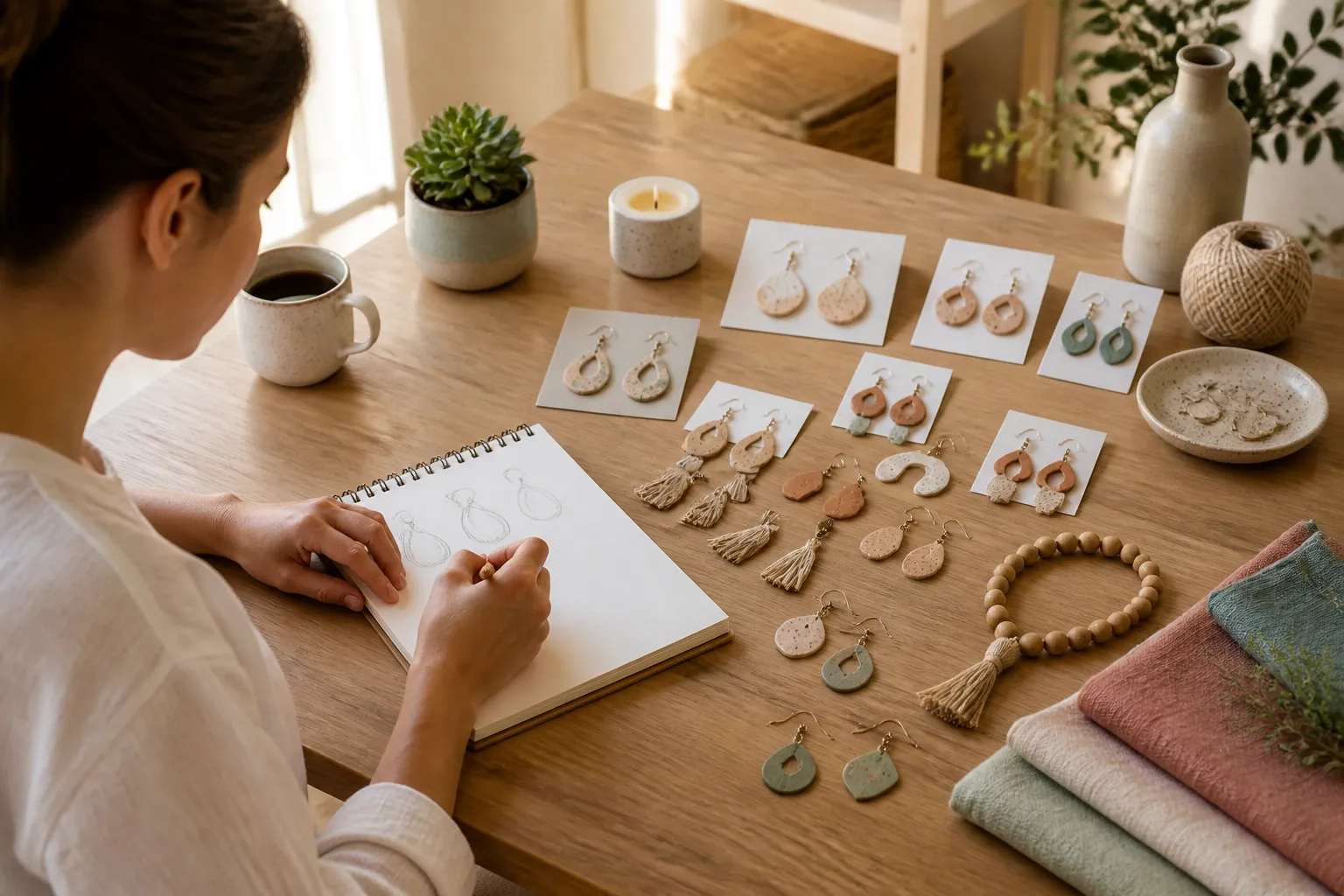
Jewelry remains broad enough for many niches, including minimalist earrings, birthstone pieces, beaded bracelets, polymer clay designs, hair accessories, and personalized necklaces. Rather than offering everything, choose a recognizable aesthetic. A collection built around coastal color, botanical forms, geometric metalwork, or understated workwear styling creates stronger shop identity.
List measurements in both familiar units when useful, and photograph the product on a model or beside a scale reference. Disclose metal content, plating, care requirements, and possible variation. If an item may irritate sensitive skin, avoid unsupported claims and describe the materials precisely. Include packaging information because jewelry is frequently purchased as a gift.
Textiles and Soft Goods
Sewn, knitted, crocheted, woven, and embroidered products include tote bags, pouches, aprons, baby accessories, pillow covers, blankets, and clothing. Textile buyers need practical information about dimensions, fabric composition, stretch, lining, closures, washing, and color variation. A measurement diagram is often more useful than a paragraph alone.
Small accessories can be easier for a new shop than large garments because sizing is simpler and material costs may be more predictable. Still, an apparently simple pouch can require careful cutting, pressing, sewing, inspection, and packaging. Price according to total labor, not only fabric consumption. Underpricing makes growth difficult and can attract customers whose expectations exceed your available time.
Ceramics, Wood, and Decorative Objects
Mugs, planters, trays, candle holders, cutting boards, shelves, and carved ornaments can perform well when they combine daily use with visual character. Explain whether each piece is food safe, dishwasher safe, microwave safe, or intended only for decoration, but make such statements only when they accurately reflect your materials and process.

Photograph handmade variation honestly. If glaze, grain, shape, or color will differ slightly, say so and treat variation as part of the product rather than hiding it. Buyers appreciate accurate expectations. Fragile goods also require thoughtful packaging tests, protective materials, and a shipping policy that explains what customers should do if damage occurs.
Sustainable and Reusable Product Opportunities
Sustainability can influence purchasing, but vague environmental language is less persuasive than a specific, verifiable feature. Reusable produce bags, cloth napkins, refillable journal covers, repair kits, fabric scraps, reclaimed wood goods, and upcycled accessories can appeal to buyers seeking lower-waste routines. Explain the product’s practical benefit without claiming that one purchase solves a broad environmental problem.
A strong listing identifies the material source when relevant, the expected lifespan, cleaning instructions, and replacement parts. Upcycled items should explain what has been repurposed while acknowledging existing marks or irregularities. Sustainability also includes packaging choices, but never sacrifice protection merely to reduce packing material. A damaged product creates waste and disappoints the customer.
Consider products that help buyers maintain what they already own. Printable mending guides, visible repair patches, storage systems, garment-care tools, and replacement components can serve a practical need. These ideas may have less visual novelty than décor, yet usefulness can produce repeat purchases and strong word-of-mouth.
Products for Specific Hobbies and Communities
Niche products can outperform broad products because they speak directly to a defined identity. Research the equipment, vocabulary, frustrations, and rituals of a community before designing. Useful categories include gardening, journaling, tabletop gaming, knitting, photography, baking, camping, reading, music, and pet care.
For a hobby product, ask what the customer struggles to organize, carry, personalize, display, or replace. A knitting project bag, book annotation kit, seed-starting labels, tabletop initiative tracker, or recipe-card organizer is more compelling when it reflects actual use. If you do not participate in the hobby, study community discussions carefully and avoid pretending to be an authority.

Pet Products
Pet owners buy collars, bandanas, tags, toys, memorial items, feeding mats, portraits, and storage accessories. Safety requires extra care. Avoid unsupported claims about durability, toxicity, or suitability for unsupervised chewing. Describe dimensions, materials, fastening methods, and supervision recommendations accurately. A decorative item should not be presented as a safety-critical product unless it has appropriate design and testing.
Pet memorial products demand respectful presentation. Offer clear options for names, dates, images, and wording, and avoid sentimental promises that assume how every buyer feels. A gentle, precise listing helps customers make a difficult purchase without confusion.
Bookish and Creative Communities
Readers may purchase bookmarks, reading journals, library-style cards, book sleeves, literary-inspired décor, and personalized annotation tools. Be cautious with copyrighted characters, logos, quotations, and protected brand elements. Original designs based on broad themes, such as gothic libraries, botanical reading, or classic color palettes, are safer than unauthorized reproductions.
Creative hobbyists often need storage and workflow aids. Brush holders, sticker books, project trackers, palette cards, and custom labels can be designed around specific tools. Include dimensions that match common equipment only when you can state them accurately; otherwise, provide a measurement guide so buyers can check compatibility.
How to Validate an Idea Before Launch
Validation does not require a large investment. Start with a short list of possible products and compare them using five questions: Is the buyer easy to identify? Does the product solve a clear problem or serve a meaningful occasion? Can you produce it repeatedly? Can the price cover every cost? Can you show its value in a photograph?
Search Etsy using phrases a buyer might type, then examine autocomplete suggestions and the language used in listing titles. Read reviews, especially neutral and negative ones, for repeated complaints about size, quality, delivery, personalization, or instructions. Those complaints can reveal opportunities, but they do not prove demand on their own.

Create a small test collection rather than launching dozens of unrelated items. Make several variations that share materials, tools, or design language. Track views, favorites, inquiries, conversion patterns, and production time, but interpret early data cautiously. Low traffic may indicate weak keywords or photographs rather than a bad product. Strong interest with few purchases may indicate pricing, shipping, trust, or unclear information.
Ask potential customers specific questions instead of asking whether they “like” an idea. Show a sample and ask which version they would buy, what occasion it serves, what price range feels reasonable, and what information is missing. Opinions are not orders, but detailed objections can improve the listing before you commit to inventory.
Listing, Pricing, and Fulfillment Decisions
Your product idea and its presentation must support each other. Use a first photograph that immediately communicates the item, followed by images showing scale, details, variations, packaging, and use. Write titles for human clarity, placing the most important product description near the beginning. Use tags and attributes honestly rather than filling space with unrelated terms.
Price from the inside out. Add material cost, labor, packaging, platform charges, payment costs, shipping contribution, expected waste, and a profit margin. If personalization increases work, price it accordingly. Free shipping is not free to the seller; include its cost in your calculations or define shipping charges transparently. Review prices after measuring actual production time.
Set processing times you can meet during busy periods, not only on ideal days. Build a quality-control checklist covering spelling, dimensions, finish, functionality, and packaging. For digital files, open every file, test links, confirm fonts, and print sample pages when applicable. For physical goods, inspect every personalized detail before dispatch.
Customer service is part of the product experience. Answer questions clearly, acknowledge mistakes without defensiveness, and provide practical next steps. Policies should address returns, cancellations, personalization errors, digital downloads, damaged parcels, and delayed delivery, while following applicable Etsy rules and local requirements.
Frequently Asked Questions
What is the easiest Etsy product to start with?
There is no universally easiest product. Digital downloads can reduce shipping and inventory demands, while small handmade accessories may be easier to photograph and fulfill than large goods. Choose an item you can produce consistently, explain clearly, and price profitably. Ease depends on your skills, equipment, available time, and tolerance for customer support.
How do I choose between handmade and digital products?
Compare fulfillment, skills, competition, and customer expectations. Handmade goods involve materials, storage, quality control, and shipping, but physical craftsmanship can create strong perceived value. Digital goods require design and file testing, then can be delivered repeatedly without postage. You can also combine both: offer a physical item with a coordinating printable or downloadable template.
Should I follow popular Etsy trends?
Trends can reveal interest, but copying them late may create intense competition and short-lived demand. Use a trend as a starting point, then add a durable audience, practical purpose, or distinctive design language. Ask whether you would still want to make the product if attention declined. A reliable shop usually balances timely products with evergreen items.
How many listings should a new shop create?
Begin with enough related listings to demonstrate a clear direction, not an arbitrary target. Several variations can reveal which colors, formats, sizes, or occasions attract attention while keeping production manageable. Expand after you understand fulfillment time and customer questions. A smaller, coherent catalog is more useful than a large collection that looks unfinished.
What makes an Etsy product stand out?
Specificity, presentation, and dependable execution matter. A defined customer, clear use case, thoughtful customization, accurate photographs, useful measurements, and responsive communication can distinguish a product even in a crowded category. Novelty helps, but buyers often choose the listing that makes their decision easiest and their expected outcome clearest.
Can I sell products using copyrighted designs?
Do not assume that changing colors or adding a name makes protected material permissible. Copyright, trademark, and other intellectual-property rules can apply to characters, logos, branded phrases, artwork, fonts, and quotations. Create original work, obtain appropriate licenses when necessary, and seek qualified legal advice for uncertain cases. Etsy policies and local law should also guide your decisions.
How can I avoid wasting money on inventory?
Start with limited quantities and shared materials. Photograph samples, test a small collection, and record actual costs before ordering in bulk. Choose supplies that can support several related products. For seasonal goods, plan conservatively because demand may fall quickly after the occasion passes. Digital prototypes, made-to-order production, and preorder approaches can reduce unused stock when suitable.
Conclusion
The best Etsy product idea is not simply the most fashionable object. It is a focused offer that connects a particular buyer with a clear benefit, emotional occasion, or creative identity. Personalization, digital convenience, visible craftsmanship, sustainability, and hobby-specific usefulness all provide promising directions, but none replaces careful validation.
Choose one practical concept, define its customer, calculate its true cost, and create a small group of related listings. Use photographs and descriptions to remove uncertainty. Test the production process before accepting ambitious deadlines, protect your work from intellectual-property problems, and treat customer questions as evidence about what your listing should explain better.
A shop can evolve without losing coherence. Begin with a manageable product family, learn which variations attract genuine purchases, and improve quality, packaging, and instructions over time. When your idea is useful, accurately presented, and reliably delivered, Etsy becomes less a search for a lucky product and more a disciplined way to build a trustworthy small business.